

One necessary condition of successfully continuing our existence is the creation of an atmosphere of hope that the huge problems now confronting us can, in fact, be solved—and can be solved in time.
– Margaret Mead
Astonishingly often, academic results and insights that challenge societal and cultural status quo remain unnoticed and unheeded. A substantial amount of such insights has been generated within isolated disciplines, which is more than enough to overturn the status quo.
However, these insights failed to make a significant impact on public awareness and action.
The Holotopia initiative aims to not only bridge the gap between the two disconnected realms—academy and society—but also to implement the necessary updates to both academic and real-world systems. This will enable information and knowledge to flow in both directions and make the difference they have to make.
The holotopia strategy is to enable a positive turn of humanity’s fortunes by fostering an informed post-traditional society, or modernity or “democracy”—which will be capable of utilizing the powers it has acquired through science and technology in a meaningful and safe manner.
We designate this new line of work as transdisciplinary.
The transdisciplinary academy, encompassing transdisciplinary science and transdisciplinary arts, transcends not only the division between disciplines and between the academy and society—but also the very mindset that gave rise to this division.
While the holotopia paradigm prototype, through which the Holotopia initiative implements its strategy, presents a thoroughly and meticulously developed prototype of a transdisciplinary academy—ready for examination, refinement if necessary, and practical implementation—we employ the term “holoscope” to convey its intuitive essence.
By embracing transdisciplinarity, the academy bestows upon society the holoscope—a reliable means of perceiving and thinking.
This holoscope extends beyond mere tools like telescopes and microscopes. Positioned between the academy and society, it not only facilitates the accessibility, utilization, and practical application of academic findings and insights—but it also infuses every fundamental human endeavor with an academic spirit, facilitated by appropriately designed information.
When we gaze through the holoscope, we perceive the holotopia.
We witness the emergence of a novel world order or paradigm within our midst—a paradigm that now demands our attention.
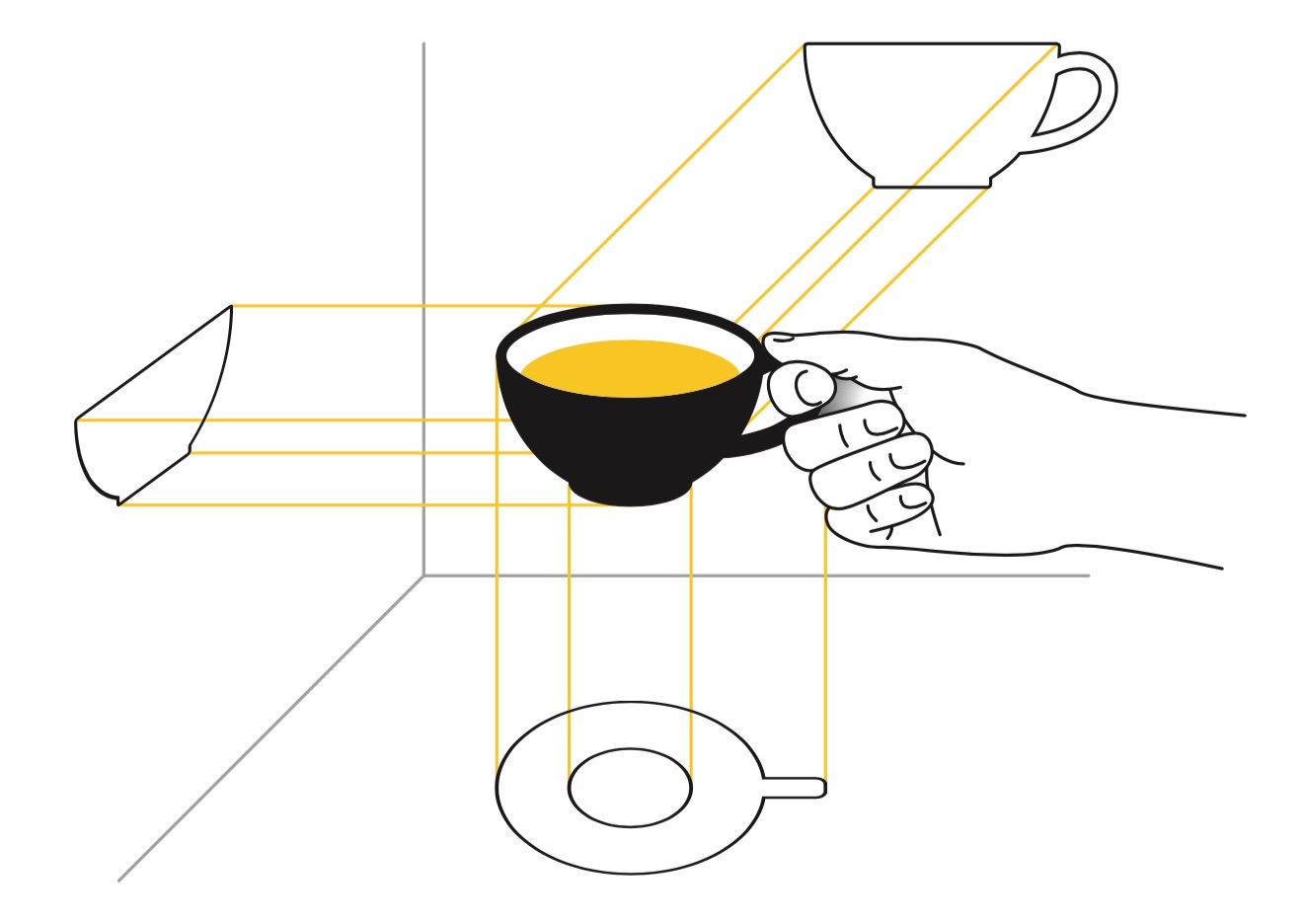
To comprehend the working principle of the holoscope, consider holding a cup in your hand to inspect its condition—whether it’s broken or intact. Clearly, a comprehensive examination from all angles is essential. The projection planes depicted in the above holoscope ideogram, which elucidates this working principle, represent academic disciplines and all other sources of information, including cultural traditions. The essence of the transdisciplinary approach to knowledge lies in selecting themes based on their relevance—and actively seeking and organizing relevant data from all pertinent sources.
As the Holotopia initiative’s academic publication, this blog delves into the technical aspects of the holotopia paradigm prototype. It also functions like a newspaper, sharing with its readers an enticing vision of a remedial new world order emerging.
We repurposed the Holoscope blog by removing almost all old posts and adding a new post titled “Holotopia’s Ontology”—which challenges the assumptions about fundamental ontological entities—language, mind, and reality—that underpin our world order.
Only by reaching this level of depth can we transform the “huge problems” we perceive into huge opportunities.

