
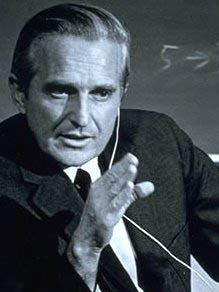


As in every epoch of its existence, mankind today finds itself in a particular “situation”. And as always this situation is created and nurtured by those who live amid the myriad events that comprise it—events that now are in the process of tumultuous and ever accelerating change, events that now increasingly and even violently clash with one another. In some deep sense our situation compels us to animate and perpetuate it almost blindly, and thus to move toward a future whose shape or quality we do not comprehend, whose surprises we have not succeeded in reducing to a rational frame of ideas, whose complexities we are not in the least sure of being able to control.
(The Club of Rome: The Predikament of Mankind. 1970)
This is how The Club of Rome founders began the statement of purpose of this think tank, after having initiated it in 1968. The Club of Zagreb—which Knowledge Federation will initiate in two days in Zagreb, see this invitation letter—is a creative redesign of The Club of Rome where the ends are similar, but the means are entirely different.
If you’ve grown accustomed to the idea that the battle for ‘sustainability’ will have to be won through strife with the existing institutional and business power holders, you might find it surprising to hear that The Club of Zagreb substitutes high-achievement academic and entrepreneurial career opportunities for strife and control. And yet isn’t that the form that a true solution should have? If our ‘global problems’ point at our and our society’s unanswered needs, should not attending to those needs be a source of prosperity and success for creative and courageous young people?
Natural solutions are rarely new; in what follows I briefly point at the work and histories of some of our visionary predecessors who developing the ideas on which The Club of Zagreb is based; and outline some events that preceded The Club of Zagreb’s inception.

Partly because of jet lag and partly because of excitement, I spent a good part of the night awake. Tuesday was stretched over a long transatlantic flight, Wednesday and Thursday our Knowledge Federation team worked intensely on The Game-Changing Game details and its presentation at the Future Salon in Palo Alto the following Monday. It was Friday morning, July 13, 2012, and we were about to continue.
To prepare for a new demanding day, I jogged to a blossoming cactus grove at Stanford campus and got a large veggie juice from Whole Foods along the way. Jogging back, about a block away from Mei Lin’s house where I was staying and where we were about to continue our meeting, I saw Roberta English walking and I instantly realized what had happened: Bill, her husband, must have sped up to be there at 10 o’clock sharp. I was five minutes late.
It turned out that several members of our team were coming at 11, so I had time to shower and grab a bowl of cereal. While we were chitchatting in Mei Lin’s large basement office waiting for others to show up, I offered to read a couple of paragraphs from a book I picked up from the bookshelf the evening before. “The Revolution in the Valley” is an account of the making of the first Mac, written by Andy Hertzfeld, a member of the original Mac design team. The title of the two-page chapter from which I was reading was “The Rich Neighbor Named Xerox” (read it on Andy’s blog).
The chapter tells how young Steve Jobs, who was about to produce the first Mac, hired young Bill Gates to make the operating system. And how to avoid premature competition, Steve made Bill sign a contract where Bill promised that he would not make any other software that used the mouse for at least one year. But then just a few months later Bill announced at the industry’s premier trade show a mouse-based graphical user interface called Windows. Here is how the story continues in the book—and what I ended up reading that morning in Palo Alto to Bill and Roberta English:
When Steve Jobs found out about Windows, he went ballistic.
“Get Gates down here immediately,” […] He needs to explain this, and it better be good. I want him in this room by tomorrow afternoon, or else!”
To my surprise, I was invited to a meeting in that conference room the next afternoon. Bill Gates had somehow manifested alone, surrounded by 10 Apple employees. […] I was just a fascinated observer as Steve started yelling at Bill about violating their agreement.
“You’re ripping us off!” Steve shouted. “I trusted you, and now you’re stealing from us!”
Bill Gates just stood there coolly, looking Steve directly in the eye, before starting to speak in his squeaky voice.
“Well, Steve, I think there’s more than one way of looking at it. I think it’s more like we both had this rich neighbor named Xerox and I broke into his house to steal the TV set only to find out that you had already stolen it.”
My first punchline is a curiosity: “The rich neighbor” in the above story was strictly speaking not Xerox, but Bill and Roberta English, the people I was reading to.
Bill and Roberta are now in their 80s. In Doug Engelbart’s SRI laboratory, where the mouse and all the other details of the graphical user interface that were later embedded into the Mac and the Windows were developed in the 1960s, Bill was the chief engineer and Roberta was the secretary. Together, they were translating the ideas that Doug, the genius inventor, was dreaming up in his office, into executable plans and steps. Bill himself physically produced the first mouse, based on Doug’s design. He also technically produced the Demo.
In the mid-1970s a large part of the team, including Bill and Roberta, were headhunted by Xerox PARC, as Doug’s funding began to dry out. The rest is history.

During my Future Salon talk I showed the above poster — the 1968 announcement for what is now in the Sillicon Valley folklore known as ‘the mother of all demos’ — as part of the motivation for The Game-Changing Game:
“When during the now famous 1968 demo Bill Paxton appeared in a window on Doug Engelbart’s computer terminal screen in San Francisco (his screen was projected on a large movie screen in the lecture hall) and they began editing together a text that was in another window, WYSIWYG-style, using the mouse and the sort of procedure that is common today, many people in the audience thought that the whole thing was not fact but fiction, and a pre-recorded film. Communication with computers was then through punched cards and line printer output. It would take many years before the import of this event for the now legendary Silicon Valley developments will be recognized. Paxton was at that moment in their Menlo Park lab 30 miles away, and the interactive editing was anticipating the Internet and the Web.
The 1968 demo is celebrated because it showed the use of computers as we have it today, all developed by a single team of inventors. But as this picture of its invitation flyer might illustrate, the reason for creating this technology was not technology itself, but something much larger—it was to use information technology to “augment the human intellect.” Doug was especially interested in “augmenting the collective intelligence” i.e. our ability to think together, and solve our increasingly complex problems. Doug never tired of emphasizing that technology and the social processes through which it is being used must be developed together.
But that was not at all what has happened.
 I used this photo of The Rocket-Powered Trike (by ‘Rocketman’ Ky Michaelson) as a metaphor for the way in which technology has been developed—by simply adding the powerful technology to the existing systemic solutions and patterns of interaction, as a rocket engine might be added to a tricycle.
When a rocket engine is added to a tricycle, the initial result is a tremendous increase in power: We are able to do so much more with so much less effort! Yet we soon discover that this increased power also brings with it new risks and problems. In knowledge work, a familiar problem is ‘information overload.’
By using the information technology in this uninformed way, we have missed the opportunity to create ‘the passenger jet’ and ‘the rocket‘ — i.e. to build systemic solutions around the information technology that use the power of technology to breed awareness.
The information technology has changed our lives and work patterns so much that we are calling our era “the Information Age.” My second punchline is a vision of a mature Information Age, where information technology is used to power new systemic solutions—the ones that make a difference.
Doug Engelbart saw this vision already in 1951; here is a description Doug gave to Byte in 1995 (see the article):
Many years ago, I dreamed that digital technology could greatly augment our collective human capabilities for dealing with complex, urgent problems. Computers, high-speed communications, displays, interfaces—it’s as if suddenly, in an evolutionary sense, we’re getting a super new nervous system to upgrade our collective social organisms. I dreamed that people were talking seriously about the potential of harnessing that technological and social nervous system to improve the collective IQ of our various organizations.
Then I dreamed that we got strategic and began to form cooperative alliances of organizations, employing advanced networked computer tools and methods to develop and apply new collective knowledge. Call these alliances NICs (Networked Improvement Communities).
By the late 1900s Engelbart’s contribution became widely recognized. Within a short period he was given all the highest awards that can honor an inventor: Turing Award, National Medal of Technology, Lamelson-MIT Prize, Norbert Wiener Award… In 1998 Stanford University staged a large conference and celebration to commemorate the 30th anniversary of the 1968 demo. Alan Kay (of the original Xerox PARC team) would famously say “I don’t know what Silicon Valley will do when it runs out of Doug’s ideas.”
And yet all this recognition was for the technology part of his work, not for what Doug really cared about.
Gradually, however, something resembling a grass-roots movement began to take shape around Engelbart’s work and person. Sam Hahn was among the first to collaborate with him. Mei Lin Fung and Jack Park joined in a short while. Hahn, Fung and Park will be present at the Club of Zagreb opening.
In 2008, parallel to another large anniversary celebration at Stanford University, Mei Lin Fung and a several other members of this group organized The Program for the Future conference, whose goal was not to celebrate Doug’s past achievements, but to continue his unfinished work.
 While meeting with Doug and his friends during my sabbatical (about which I reported in an earlier blog post), I resisted the desire to have a ‘Doug and Dino’ photo taken. This picture was taken a year later, on a party in Mei Lin’s house in connection with our Stanford University workshop (where we announced ‘systemic innovation’ as the next frontier, and the transdisciplinry way of working developed in Knowledge Federation as its enabler). I needed this photo because I knew that one day I would be writing in this blog about my conversation with Doug that had just taken place.
During recent years Doug’s memory has faded so much that I no longer expected that a meaningful conversation about our work would be possible. Several times he asked me: “So, what is it that you’re doing?”
“We are continuing your work,” I answered. “Bringing it into actual practice, where it will make a largest difference — into public informing, science, education…”
It turned out that while Doug’s memory had faded, the rest of his beautiful mind was still working well. The old man paused for awhile, and then said: “You know, I have put my work somewhere into the back of my mind. But when you speak like this, it is as if a crack opens up, and lots of emotion comes through.”
How can we change real-life systems?
The Game-Changing Game, whose design and presentation we were completing last July in Palo Alto, is a prototype of a generic answer. I say ‘generic,’ because it can be applied or adapted to any real-life system. I say prototype because the GcG will be evolving continuously.
The transdiscipline that is dedicated to creating and running The Game-Changing Game and its instances is The Club of Zagreb — which is being inaugurated at our meeting in Zagreb on September 27th.
The situation, the panel and the public — initial potential members at this first meeting — are composed to receive the Engelbartian flame from our foreign guests, and then begin a concrete systemic innovation project where young researchers and entrepreneurs are engaging in a game-changing game in public informing. While the goal of this project is a public informing that can truly make a difference — by federating or combining the public, the scholars, the politicians… into a collectively intelligent collective mind… this project also fosters — no less importantly — systemic innovation in research and entrepreneurship, enabling them to work together, and to work on systemic change or evolution.
Roberta and Bill are two very different people. Bill is technical; Roberta is a socially engaged owner of an art gallery in Sausalito.
When I finished my story, Bill was nodding his head and smiling. Before the 1968 demo he had some experience in theatre production; the Mother of All Demos was largely his design. He was glad to see that the flame is alive and that the story continues.
Roberta was sensing my personal struggle against the prevailing zeitgeist, and wanting to encourage me: “When we did the 1968 demo, there was of course lots of activity and excitement. But the day after we were back in our office, and it was a day like any other day: the phone did not ring, there were no journalists at our door… It took many years until the meaning of what we did was recognized.”
Feeling grateful for this encouragement, I now pass it on to our young collaborators in The Game-Changing Game, the A-players. These past several months Luka Šolta, the student leader of the germinating ZIG Project in Zagreb, has been in a rather Engelbartian type of situation, struggling to explain what this whole thing is about to other potential A-players.
Our intention when opening The Club of Zagreb is to bring some aware and powerful people together as Z-players, and to see if we can change this dynamic.
 Dino Karabeg's blog
Hey there, You have done an excellent job. I will definitely digg it and in my opinion recommend to my friends. I am confident they’ll be benefited from this website.