
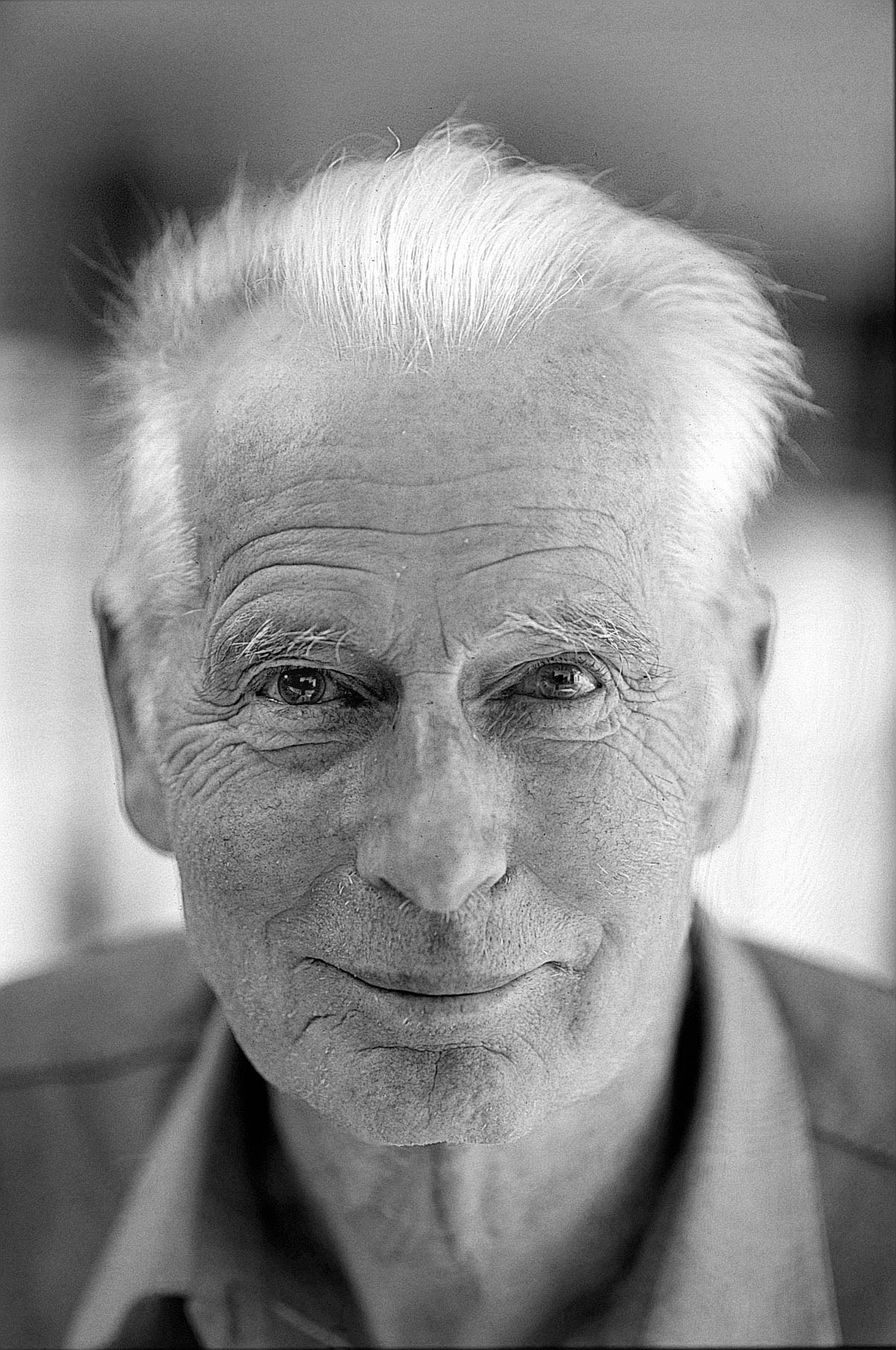
A shallow but presently rather powerful movement, and a deep but less influential movement, compete for our attention.
– Arne Næss
Through the Holotopia initiative, we aspire to transition from a superficial to a profound—or, as we prefer to call it, informed—approach to the core issues of our lives and times, particularly in light of the pressing and existential challenges we are or ought to be facing.
Ontology, as we understand it, is the foundation of our comprehension of the most fundamental concepts, including language, mind, and reality, and their relationships. This deepest aspect of our contemporary entanglement—and our efforts to restore its functionality—will be the focus of our discussion.
To set the stage and spark your interest, I’ll share three illustrative vignettes.

In the 1960s, Arne Næss, an eminent academic philosopher, read Rachel Carson’s book Silent Spring and realized that philosophy needed a fundamental transformation.
The reason why the spring was silent was the unintended consequence of pesticides, which were meant to eliminate pests but ended up harming birds as well. Arne could easily discern that the same flawed thinking, often referred to as “fragmentary”, “instrumental”, or “mechanistic”—where we pursue narrow goals like profit and create disastrous “side effects”—is the root cause of numerous problems. He acknowledged that the task of correcting our thinking is the core responsibility of philosophy, and that the institutionalized philosophy taught in schools and universities is inadequate to fulfill this crucial role. He resigned from his position at the University of Oslo and dedicated himself to developing what he called “ecosophy”.
Today Arne is widely recognized as the founding father of “deep ecology”.
The central premise of deep ecology is that the problems we perceive are deeply rooted in our values, lifestyles, and, on a more profound level, in the way we use our minds, or, in a word, in our culture. Arne realized that their solutions would only be possible if we address those underlying causes.
The early history of The Club of Rome—an initiative parallel to Arne’s—provides another compelling motivating case.
At its inaugural meeting in Rome in 1968, The Club’s founding members decided that they would not focus on specific “global problems”, but on the “world problematique” that encompasses them all.
A pivotal moment occurred at The Club’s second meeting in Lausanne, Switzerland, in 1970. The resulting report, The Limits to Growth, which remains the most widely read book on environmental issues, diverged from the intentions of The Club’s founders. Three of them—Erich Jantsch, Hasan Özbekhan, and Aleco Christakis—resigned after the Lausanne meeting.
“The Limits to Growth” study demonstrated in an academically rigorous way (by experimenting on a computer based on data, and avoiding to experiment with the real thing, which can be all too costly) that “the human race is on a collision course with nature”. Aurelio Peccei, The Club of Rome’s leader, emphasized the urgent need to “find a way to change course”. However, the study fell short of igniting the necessary shift in priorities and action. This confirmed the concerns of the founding members who resigned.
Peccei later summarized these concerns by asserting that we, as modern people, are “culturally unprepared” to even comprehend the nature of our new situation correctly.
At the turn of the millennium, The Economist organized a contest called “World in 2050”; which prompted me to write and submit an essay titled “World in the Year 2000”. Considering the disruptive global trends, I argued, it is impossible to predict the world’s future a half-century from now. However, the outcome will critically depend on how we see the world and act today.
Dennis Meadows and his colleagues have been warning us that humanity is on the brink of a systemic “collapse”, which would involve cascading failures of our core systems, such as food production and markets, finance, legal systems, and governance. Presently, a global war appears to be an even more immediate threat.
In my essay, I emphasized that our immediate priority should be the creation of a viable alternative—an embryonic new world order. Even if it’s initially minimal, this alternative could make a significant difference in determining whether we experience a collapse or a reconstruction.
Holotopia as an idea
The word “holotopia”, a modification of “utopia”, can be better understood by examining the latter.
Five centuries ago, St. Thomas More coined the term “utopia” and used it as the title for his renowned political essay. Today, it is predominantly used as an adjective to describe unrealistic ideas that are impractical in real life.
However, this interpretation misrepresents More’s original intent.
By writing Utopia, More created a case—inspired by the managerial style of his political leader—for using a different way to think in politics; different, that is, from King Henry VIII’s “fragmentary”, “instrumental”, or “shallow” approach. More knew that his was a risky endeavor, but that it had to be done. So he wrote his essay in Latin, named it in Greek, and published it abroad. And he let a fictional character, Raphael Hythloday, put forth his advice to leaders.
More introduced Hythloday as a world traveler who had traveled to the Americas, which had newly been “discovered” and were in the focus of the public eye. Hythloday traveled beyond the realm described by early explorers and ended up in Utopia, where an entirely different societal and cultural order reigned from what was common in More’s England and still is worldwide. In Utopia, there is no military profession, for instance, and no monetary system. The Utopians do have gold because they need it to trade with their neighbors, but they learn from childhood to treat it with contempt.
Utopia’s description, however, was only More’s medium; the way of thinking the Utopians used to create their society was his message.
By relating how a radically better societal and cultural order can result by accounting for the subtle relationships that exist among various components of the complex system of society and culture—More made a case for that approach to governance and politics.
Having completed Utopia’s description, More realized that his essay could still be mistaken for a fictional story, that its practical relevance could be ignored. So he added an introduction where Hythloday is in England, and talks to an English judge about the then common practice to execute thieves by hanging; which was so common, this judge remarked, “that there were sometimes twenty on one gibbet!” And added that he “could not wonder enough how it came to pass that, since so few escaped, there were yet so many thieves left, who were still robbing in all places.” There is no reason to wonder, Hythloday (More) explained; and went on to point out that simple theft was not “so great a crime that it ought to cost a man his life”; and that when people feel they’ve been treated unjustly, their own sense of justice is impaired; and that when recurring wars compel men to abandon their trades, they have to resort to robbery when they come back; no punishment, however severe, could “restrain those from robbing who can find out no other way of livelihood”, Hythloday contended.
More’s advice to political leaders was clear: when they attempt to solve their country’s problems through superficial thinking, they inadvertently create a societal and cultural order that exacerbates those problems. The reference to executions was not coincidental; Henry VIII executed over fifty thousand individuals, including two of his six wives—and ultimately, Thomas More himself.
Therefore, yes, More’s initiative to initiate a transition from superficial to informed approach to political action was unsuccessful.
However, as we have just seen, given the current circumstances, we cannot afford to abandon More’s attempt to reshape politics.
The word “utopia” is composed of Greek “topos” which means “place”, and the prefix “ou” which is a negation; so “utopia” is a non-place or a non-existing place. By giving it that name, More attempted to make it clear that Utopia was not a description of a “real”—existing or fictional—place, but a political essay.
By replacing the prefix “ou” by “holo”, we removed the negation—and made a clear reference to the remedial new thinking.
Holotopia is an embryonic new world order, which we are co-creating by thinking and acting in a way that is no longer “fragmentary”, “instrumental”, or “shallow”.
Holotopia as a system
Imagine what we are creating, and referring to as holotopia, as a bridge between the academy (defined as “institutionalized academic tradition”, encompassing our schools and universities) and society; which provides each with essential capabilities they lack and unites them in a novel manner.
For the academy, it presents a practical means to rectify certain fundamental historical errors—in our understanding of reality, the human mind, and information.
These errors, although academically identified and reported, continue to shape our thinking and hinder our achievements.
For society, it offers a practicable way to change course.
By employing a new, informed approach to thinking, we can update our institutions. Instead of reflecting age-old prejudices, these institutions will organize us to accomplish the timely tasks that are essential.
At their interface, the holotopia empowers the academy, information, and knowledge to make the difference they need to make to society during this critical time of need.
Erich Jantsch, in his 1969 MIT report and call to action, envisioned a “transdisciplinary university” as a means to enhance society’s capacity for continuous self-renewal. While “transdisciplinarity” will be crucial, as we’ll explore further, let’s introduce the systemic update that holotopia stands for metaphorically: The academy will respond to fundamental and practical calls for change by providing society with the holoscope—a tool that enables us to comprehend and manage our new situation effectively, surpassing the capabilities of traditional tools like telescopes and microscopes.
Through the holoscope, we perceive the holotopia.
We discover a distinct and radically superior societal and cultural order that we can collaboratively and urgently create.
While what I’m about to say is likely to withstand academic scrutiny, and its core elements have already passed standard academic tests through presentation and peer review, I won’t be making any veracity claims.
My objective is to establish a process.
To understand it, imagine us seated in a circle with a box in the center, which you can also envision as a magician’s hat.
This ‘box’ or ‘hat’ represents the holotopia paradigm prototype.
Which is the culmination of thirty years of dedicated work, collaboration with diverse teams of exceptional professionals, and numerous serendipitous discoveries and encounters.
The term “prototype” encapsulates the essence of the process.
A prototype is a fully functional model of the actual object, but it’s notthe object itself. Its primary purpose is to facilitate a process where we examine the prototype, conduct experiments, and make improvements—all of which lead to the creation of the actual object.
By serving as a complete model of the object, the prototype enables us to create it in practice.
The holotopia paradigm prototype is designed to be comprehensive, providing answers to all relevant questions and empowering us to take action to transform the practice.
Furthermore, it engages us in a co-creative process where we continuously enhance the prototype itself.
Holotopia as a paradigm
Transformative insights are published in academic literature, yet they fail to influence public awareness and action. Traditional knowledge, the world’s cultural heritage, remains marginalized and unrecognized.
The evidence provided within the holotopia paradigm prototype demonstrates that a radically and comprehensively “better world” or paradigm is poised to emerge in our midst because we already possess all the data points necessary to create it.
All we need to do is connect the dots.
The holotopia strategy seeks to enable us to shift the paradigm, by rekindling our collective capability to connect the dots. The holotopia mission outlines concrete steps to achieve this, which are already in progress. The holotopia paradigm prototype renders the holotopia strategy feasible, and the holotopia mission actionable.
The term “paradigm” is here used largely as it was introduced by Thomas Kuhn in his seminal work The Structure of Scientific Revolutions. Kuhn’s groundbreaking contribution to our understanding of science and the pursuit of knowledge lies in challenging the conventional notion that they constitute a gradual accumulation of “true” pieces that remain eternally valid. Instead, he proposed that science is a series of “revolutions” or “paradigm shifts”, each of which introduces a novel way of conceptualizing a particular domain, a novel way to speak and think, which enables us to see and comprehend more than we did before; and to also achieve more, by directing our creative resources differently.
The introduction to the recently completed Liberation book begins with the iconic image of Galileo in house arrest, whispering “And yet it moves!” into his beard—softly, so the Inquisition won’t hear him. Throughout the book, an analogy is drawn between Galileo’s situation and our own. Galileo was in house arrest a century after Copernicus. Looking back, we are inclined to wonder, “What took those people so long to recognize the obvious?” Let this be a reminder that paradigms tend to persist by ignoring counter-evidence; even when change is long overdue.
In keeping with this analogy, we discuss two distinct paradigms—where an academic new paradigm sparks a new paradigm in society and culture.
Donella Meadows identified twelve “leverage points”—specific areas within a complex system (such as a company, city, or ecosystem) where a minor shift in one area can result in substantial and enduring changes throughout the entire system. Among these, she deemed transcending paradigms—the capacity to transcend established mindsets—as the most potent leverage point.
The Holotopia initiative advocates for acting in this “most powerful” manner.
The Holotopia in Brief book has the drawing of a dotted elephant on its front cover.
There are several reasons why we use the word “elephant” as a metaphorical pseudonym for “holotopia”.
One of them is to point out that its various elements constitute an organism-like whole—in which everything depends on everything else and supports everything else. Another reason is to suggest that the elephant is already ‘in the room’—but we fail to see him because of our “ontological commitments”, to use Willard Van Orman Quine’s apt phrase.
Holotopia ontology
Ontology, a term commonly used in two distinct contexts, holds significant importance in both philosophy and knowledge representation. In philosophy, it refers to the study of the nature of reality and the fundamental concepts that define it; in knowledge representation, it denotes a set of concepts that serve as a reference system for organizing and structuring knowledge resources within a specific domain.
The holotopia ontology uniquely combines these two approaches, transcending their inherent differences.
To gain a deeper understanding of holotopia ontology, let’s explore the historical evolution of our comprehension of reality.
Before the advent of science, it was widely believed that everything that exists was created by a perfect being. This being, being perfect, had perfection as its ultimate goal. Pre-scientific explanations of natural phenomena were “teleological”, meaning they interpreted the purpose that the perfect being had when arranging things as they appear.
Science introduced a different understanding of reality and a different approach to explaining it.
Science emerged as a reaction to teleological explanations, seeking to explain phenomena in ways entirely comprehensible to the human mind, without resorting to a “ghost” acting within a “machine”, as Noam Chomsky aptly described it in his lecture here in Oslo. In practice, this meant explaining phenomena as one would explain the functioning of a clockwork, where one explains how one cogwheel moves another and how the movement of the clock’s hands results. This method of explanation proved so successful that, by the end of the 19th century, it seemed that everything could be explained in this way, and that reality was essentially a machine.
However, 20th-century science disproved this idea of reality and discredited this approach to knowledge in several ways.
These are documented in the holotopia paradigm prototype. Let me summarize them in a parable and offer a conclusion.
The parable is the splitting of the atom.
The word “atom” is derived from the Greek word “atomos” meaning “uncuttable”, and was attributed to Democritus, a pre-Socratic philosopher. Democritus used the term to describe the smallest possible unit of matter and established philosophical materialism, which posits that matter is the only substance that exists and that reality can be understood in terms of its components and their interactions. When scientists discovered that matter is indeed composed of particles, they naturally assumed that they had discovered what Democritus had foreseen and named those particles after him.
Subsequent developments revealed that the “atom” is not indivisible, that it comprises “subatomic particles”; which turned out not to be particles but something more elusive and akin to waves. Experiments demonstrated that those “quanta” of energy-matter exhibit behaviors beyond human comprehension and linguistic expression.
The results of these experiments have been successfully modeled by mathematical theories.
These theories, in Kuhn’s terminology, constitute “incommensurable” paradigms. The two most prominent among them—relativity and quantum mechanics—proved impossible to integrate into a single, coherent mathematical theory or worldview.
Our most brilliant minds attempted this endeavor and ultimately failed.
In this way, science confirmed what Immanuel Kant proposed in Critique of Pure Reason—that reality is infinitely complex, ineffable, and incomprehensible. Our theories and representations of reality are simplifications; to Kant, even time and space were not objectively existing but constructs we humans created to make the world comprehensible.
None of our “reality pictures” offers us a definitive understanding of “true reality”!
But this does not diminish their significance!
Throughout human evolution, shared reality pictures have served two crucial purposes:
- They organized data into a coherent system and made the world comprehensible. According to Aaron Antonovsky, the pioneer of “salutogenesis” (the scientific study of health and its promotion), this is essential not only for our psychological well-being but also for our physical health.
- These shared reality pictures also organize us humans into societies that are fit for survival, acting as ‘software’ for our societies and institutions.
The 20th century science, having failed to provide us with a coherent reality picture and a means to comprehend the world, has left us with two older, competing ones: the traditional-religious and the fragmentary-materialistic.
Both of these perspectives fail to fulfill the two purposes that shared reality pictures fulfilled for our ancestors.
In philosophy, the prevailing position on this matter is “constructivism”, which posits that we construct our reality perceptions, rather than “discovering” an objective and true reality. This constructivist perspective, in practice, led to “relativism”, asserting that no single viewpoint holds universal superiority. Consequently, truth, meaning, beliefs, and values are deemed valid only within their specific cultural or temporal context.
Sociologists identified the emergence of “postmodernity”, characterized by profound skepticism toward universal truths, grand narratives, and objective reality. Zygmunt Bauman aptly described this condition as “liquid modernity”, characterized by the complete disintegration of the reference frames that appeared stable in the past.
Reality construction has become an integral aspect of both business and politics.
It is no longer considered “lying” but rather “PR”—a necessity for maintaining competitiveness and achieving success.
The holotopia ontology fulfills the functions that shared realities had in the past—without calling itself “reality”.
It comprises a system of concepts called keywords that enable us to organize in a meaningful way the resources that need to be mobilized toward the urgent task at hand—restoring our capability to transcend our current paradigm and change course.
To emphasize that a specific expression should be interpreted as a keyword, we write it in a distinct font.
Turning “ontology” into a keyword, we define it based on its etymology—combining the Greek root onto (meaning “what is”) with the suffix logy. Ontology results when we apply logos (representing correct, not fragmentary, instrumental, or mechanistic thinking) to reshape our understanding and handling of what is.
But what is “correct”?
We define something as pivotal if it significantly influences our society’s evolutionary course. We consider its interpretation and handling correct if it (1) aligns with the data and (2) contributes to correcting the course. We use the terms “whole” and “wholeness” to represent the desirable or “good” state, the ultimate goal we should strive for. We then commit ourselves to exploring what constitutes a whole human and societal condition and to taking the necessary actions to achieve wholeness.
Our use of the word “system” aligns well with this objective. The words “system” and “systemic” have been employed in various systematic efforts to overcome fragmentary thinking and alleviate its consequences, within the so-called “systems sciences”. However, we use the word “system” as a keyword to alter our perception of society’s systems and reshape the systems in which we live and work, as systems scientist Béla H. Bánáthy aptly described them. This fundamental shift in perspective is precisely what Thomas More intended when he wrote Utopia.
But what about the word “reality”?
Considering what’s been said, you’ll easily comprehend why we didn’t select “reality” to be a keyword.
Why we use “reification” instead—to point to the common practice where we attribute the reality status to things and ideas we ourselves have created; which then hinders us from recreating them and changing course. But here’s a rub!
Reification is in the way we speak!
If I begin a sentence with “Science is…”, you’ll expect me to say what science “really is” out there in the real world, i.e. what scientists do; and also, that my definition should reflect the ontological commitments we already share about “science”.
Clearly, this keeps us bound to both the present order of things and to historical ontological commitments—even when they contradict the data and keep us on a disastrous course.
To construct this ontology, the definitions are made by using truth by convention, as Willard Van Orman Quine recommended; which circumvents reification. When we define a concept X by convention—we are not saying that X “really is” as defined, but creating a certain way of looking at X. Typically, we do that by assigning to X a place in a larger whole or system.
Such a definition then enables us to study—by consulting and organizing suitable knowledge resources—what X needs to be like, if this larger system is to be well-conceived or whole.
“The mind organizes the world by organizing itself”, Jean Piaget famously remarked. The ontology must empower the mind to reorganize the world by reorganizing itself.
Hence we added “mind” as a keyword to this ontology.
And assigned to it the pivotal place in ourselves—where the founding fathers of the Enlightenment have, indeed, already placed it.
The mind is that faculty within ourselves we rely on to make choices and decisions; our collective mind occupies the same place on the societal level.
Little can be done with the mind as a piece of ‘hardware’; information has to step in and help the mind organize itself. And while the mind can, of course, cultivate itself and be improved—here too it depends on information to tell it how.
Information includes not only information-bearing artifacts—but also the pertinent technology-enabled social processes and systems.
It is by updating the processes and the systems of information that we can make a decisive impact on how the mind is used and change course!
Acknowledging that the way we use our minds (“the way we think”) and the quality and nature of our information are inseparable—we let “logos” point to the correct way to use both of them together.
Hence logos is informed reflection—and that’s how the philosophers of old used this word.
Presently, however, “logos” is not a word in our language; but it’s present in it through its cognates “logic” and “logy”. The former is used to suggest that the correct way to use the mind has already been found—and even formalized, as a fixed set of rules; while the latter has been used as a suffix, to form the names of academic disciplines, and suggest that the correct way to information has already been instituted at our universities.
By defining logos as we did, we undertook to renew the quest for the correct use of the mind and information.
We employ the concept of habitus as a keyword to further motivate and energize the pursuit of logos.
This concept highlights how we habitually misuse our minds and disregard information. In fact, habitus points to a pervasive error in our comprehension of ourselves, a flaw introduced by the Enlightenment’s founders. To understand it, we can revisit that pivotal moment in our civilization’s history when René Descartes sought a solid foundation for rebuilding knowledge.
Descartes reasoned that since a perfect being created the human mind, believing the mind is inherently flawed or deceptive would imply a contradiction—that a perfect being is a deceiver.
This error is deeply ingrained in our self-identity as “sapiens” (the ones who know), a concept introduced by science that implies that knowledge is our inherent biological right. It is also embedded in our systems, particularly in governance and “democracy”. We assume that we naturally know our “interests” and that political leaders, unlike doctors and lawyers, don’t require specialized education, information, or even specific character traits to fulfill their roles.
When we create holotopia’s ontology, we challenge Descartes’ assumption and examine the data.
Cognitive neuroscientist Antonio Damasio pointed out in his book, Descartes’ Error, that we don’t typically use logos (evidence-based reasoning) to make decisions. Instead, we are governed by beliefs that are transmitted directly from person to person through “habituation” or “socialization”. Consequently, only a small fraction of our ontological commitments are ever subjected to the scrutiny of reason. Instead, we absorb them from our environment through osmosis.
Aristotle distinguished between “habitus” and “episteme”, which he considered “scientific” knowledge. We adopted the term “habitus” from Pierre Bourdieu, a prominent French sociologist, who used it as the central element in his “theory of practice”. This theory aimed to explain how human societies function in reality. Bourdieu, in particular, highlighted the significance of habitus in the insidious “symbolic power”. He explained that this power could only be exerted when everyone involved—its victims and its perpetrators—ignored its very existence.
Anthony Giddens, a leading British sociologist, provided a similar warning in Modernity and Self-Identity:
“The threat of personal meaninglessness is ordinarily held at bay because routinised activities, in combination with basic trust, sustain ontological security. Potentially disturbing existential questions are defused by the controlled nature of day-to-day activities within internally referential systems.
“Mastery, in other words, substitutes for morality; to be able to control one’s life circumstances, colonise the future with some degree of success and live within the parameters of internally referential systems can, in many circumstances, allow the social and natural framework of things to seem a secure grounding for life activities.”
It is a breathtaking sight to explore how everything—the intricate web of mishaps in the academy’s evolution, the frenetic pace of our daily lives, the chaotic nature of our information—conspired to put us in a predicament where the “reality” defined by the systems we inhabit and operate within serves us as the reference; while—as Margaret Mead aptly stated, changing that reality is “one necessary condition of successfully continuing our existence”.
This realization sheds light on the conception of holotopia’s ontology as abstract concepts defined by convention—which then gain meaning and veracity through evidence, and relevance through challenging the status quo. It becomes evident why this entire process, aimed at correcting our understanding and handling of the pressing and existential challenges we face, is termed “dialog”, and defined in accordance with the Greek word “dialogos” (through logos). Moreover, it explains why the liberation dialog—through which we aspire to break free from the grip of “ontological security”, or habitus—is our way to begin.
In a moment, I’ll demonstrate how we applied logos to construct holotopia’s epistemology (a foundation for knowledge that rectifies the errors made by the founders of science) and methodology (a transdisciplinary approach to knowledge that transcends the limitations of traditional sciences). I’ll also explain how this corrected approach to knowledge has been applied to create holotopia’s vision (a demonstrably secure foundation for life activities). I’ll conclude by providing a brief overview of holotopia’s strategy and mission—our efforts to ignite the paradigm shift, inviting you to actively participate.
So, let me conclude this introduction to holotopia’s ontology by emphasizing that it serves as a foundation for reviving the academic tradition.
That this is not a departure from the academy’s esteemed legacy and spirit.
Plato established the Academy not to unravel the mysteries of nature or prepare people for jobs, but to address an urgent societal need, akin to our own. During Athens’ decline after its Golden Age, its politicians pursued careers through fragmented, instrumental, or superficial thinking. Athenian democracy was dysfunctional, and its philosophers, known as “sophists”, taught the youth that truth is relative and how to succeed in the world.
Socrates, Plato’s mentor, sought to ignite a corrective trend by engaging young people in dialogs.
Socrates did not teach a philosophy but insisted that his own knowledge was insignificant. He conceptualized his work as midwifery, similar to the role of older women who, while being unable to give birth, were skilled in assisting younger women during childbirth. In this spirit of organizing historical data to make sense and guide change, we can now view Socrates as a historical exemplar of a frontier thinker who, along with Bourdieu and Damasio, conveyed that humans tend to rely on habitus rather than logos to function in society. The fact that Socrates was tried “for corrupting the youth” and sentenced to death further underscores the revolutionary nature of the dialog.
Plato, his esteemed student, added another dimension to his teacher’s teachings.
Plato, when interpreted through the lens of holotopia’s ontology, posited that as long as we reify ideas, we remain ensnared in the grip of habitus. He emphasized that to establish a superior or harmonious world order, we must develop a novel reference system and the capacity to perceive and think in terms of ideal concepts.
The Enlightenment, from a European perspective, constituted a revival of the academic tradition (which had been evolving in the Arab world for an entire millennium). However, this revival was limited to Aristotle, Plato’s star student. Aristotle, in contrast to his teacher, argued that evidence, derived from our experiential encounters with material reality, should be utilized to generate ideas. This perspective paved the way for the emergence of science and the advancements we’ve been discussing.
As I have just elucidated, this age-old dichotomy—between “materialism” and “idealism”—is harmoniously reconciled within the framework of holotopia’s ontology.
This reconciliation is achieved by relying on truth by convention to define ideas; and by incorporating human experience, in its diverse forms, to imbue them with substance.
 Dino Karabeg's blog